
Calendar of Events
Note: Meetings are usually held on the second Sunday of each month, September through May, from 2:00 to 4:00 p.m. Currently we are meeting via Zoom, but in-person meetings are held at the Bethesda-Chevy Chase Services Center, 4805 Edgemoor Lane, Bethesda, Maryland, and occasionally at other venues. The meetings are open to anyone. However, certain meetings may require a fee.

A Bite-Sized History of Sushi: How a Fermented Dish Became a Global Fast Food
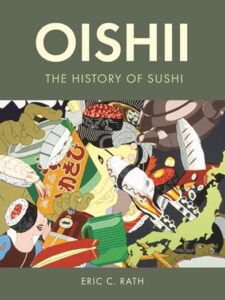 TALK DESCRIPTION

Sushi’s appearance in US grocery stores, usually coated in sauces and fried toppings, demonstrates how the once simple dish evolves as it globalizes. But sushi was a much different recipe 1,200 years ago when it was first mentioned in Japanese records. The likely derivation of “sushi” is “something sour” indicating that it was a fermented food, one that took months if not years to prepare. Sushi’s history can be measured by the various attempts to shorten its fermentation period to the point that nearly all sushi today is no longer fermented. Yet, in our global culinary world where everyone now craves umami, “ancient” fermented sushi holds new possibilities of flavor to enrich our understanding of the culinary past and offer new taste profiles for the future beyond what we might think possible for Japanese food.
SPEAKER BIO
 Eric C. Rath is a professor of history at the University of Kansas where he teaches courses on food history and premodern Japan. A specialist in traditional Japanese foodways, Rath has published articles and translations on the use of food in ritual, the history of vegetables and confectionery, tableware, and the representations of food in Japanese art. His books include Food and Fantasy in Early Modern Japan (2010), Japan’s Cuisines: Food, Place and Identity (2016), and Oishii: The History of Sushi (2021). He is a member of the editorial collective of Gastronomica: The Journal for Food Studies and his latest book is Kanpai: The History of Sake (Reaktion Books: 2025).